When a part number means three different things in three plants
ERP in one region, a different ERP after the last acquisition, an MES per site, a quality system that predates both, and supplier data arriving as spreadsheets. Every plant is optimized locally and the group cannot answer a question that crosses two of them.
Each plant optimized on its own terms
Two ERP instances, indefinitely
Consolidation onto one instance has been planned, budgeted and deferred. Meanwhile the reporting layer papers over the difference with mappings nobody has reviewed since.
Shop floor systems disagree with the office
MES, historian and quality data are structured for operations rather than analysis, and reconciling them with ERP records is a specialist job at every site.
Supplier data arrives in whatever shape it is sent
Supplier master data arrives in whatever shape each supplier sends it, and the same vendor appears under several names and tax identifiers.
ERP, MES, quality and supplier data in one model
SetMeld maps each system into a shared ontology and resolves entities across them, so a part, a plant, a work order and a supplier resolve to one node regardless of how many systems record them. The graph stays current as production data changes.
Representative systems. SetMeld connects to any structured dataset you have credentials for. No migration, no modernization prerequisite.
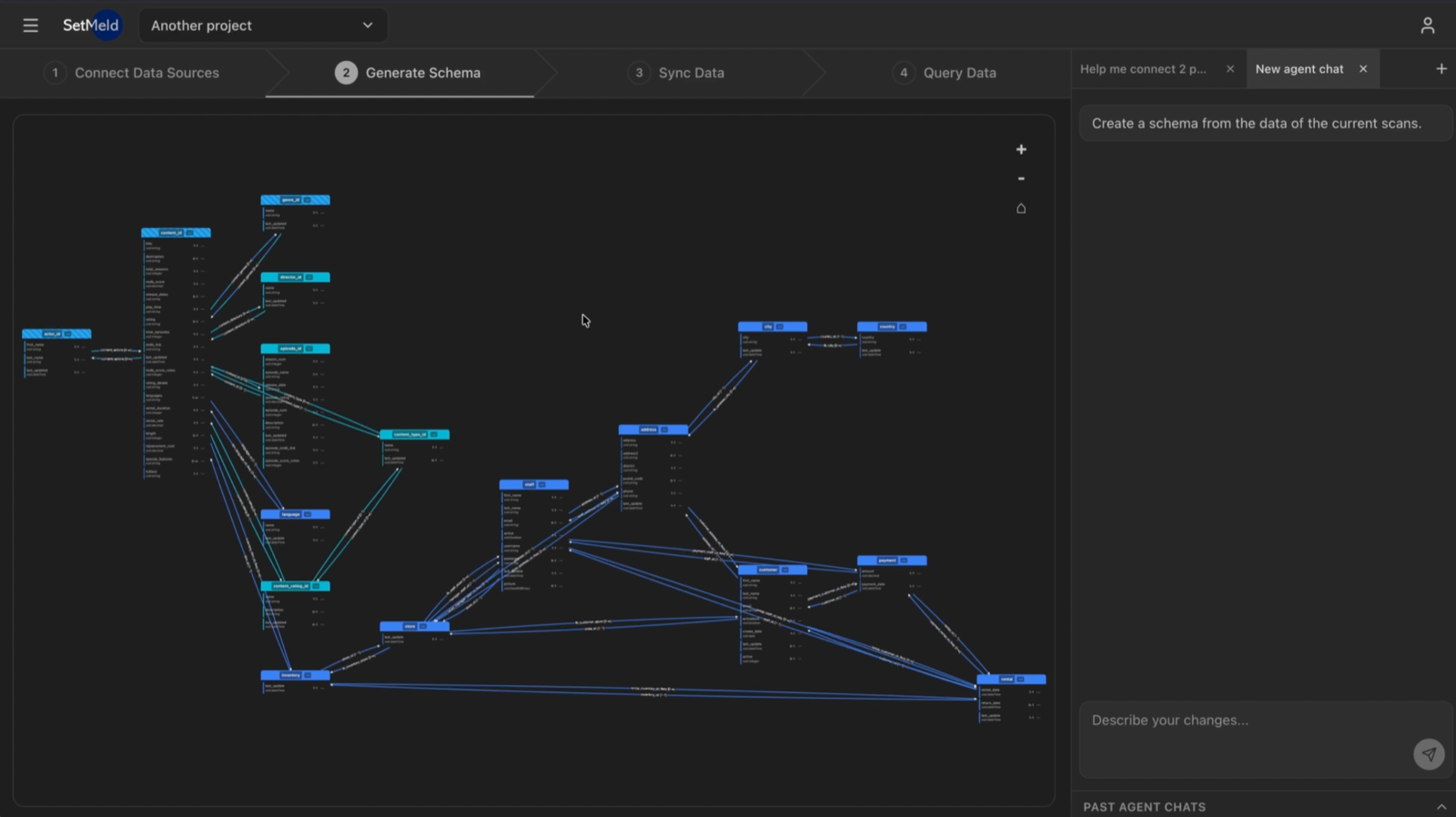
Answered in one query, with provenance
- What is our true consumption of this component across every plant and every ERP instance?
- Which suppliers are we exposed to more than once through different subsidiaries?
- How does yield for this process compare across sites, given each records it differently?
- Which work orders are affected by a quality event traced to one supplier lot?
- What does group-level inventory actually look like, right now, without a monthly extract?
Why the answer is trustworthy
Every result is computed over governed, unified records rather than retrieved from a pile of text. Each answer carries datasource attribution back to the systems that produced it, and agents querying the graph inherit the same access controls as the people who own the underlying data.
The integration is generated, verified by our experts and approved by your team.
Deploy on-prem, in private cloud, or as SaaS with the graph resident in your network.
New sources are additional connections at no additional project cost.
What changes for a manufacturer
Group-level visibility without consolidation
Answer cross-plant questions before the ERP harmonization program finishes, or instead of it.
Visible supplier concentration
Entity resolution surfaces concentration that hides behind different vendor records in different systems.
New sites onboard as connections
An acquisition brings systems that connect to the model you already have.
Ask one question across both ERP instances
Bring the cross-plant question that currently requires a monthly extract and four people.