Day-one visibility, without a three-year systems consolidation
The deal closes and suddenly there are two of everything: two ERPs, two CRMs, two customer masters, two definitions of revenue. The synergy case assumed combined reporting from month one; the systems integration plan says 2029.
The synergy case moves faster than the systems
Two of every system
Both organizations have a complete, internally consistent stack. Choosing a winner takes years, and until then group reporting is manual.
Overlapping customers are invisible
Cross-sell and concentration analysis depends on knowing which customers you both already had, which requires entity resolution nobody has done.
The deadline is set by the transaction
Boards, lenders and regulators want combined numbers on a schedule set by the transaction.
Both estates, one model, while consolidation proceeds
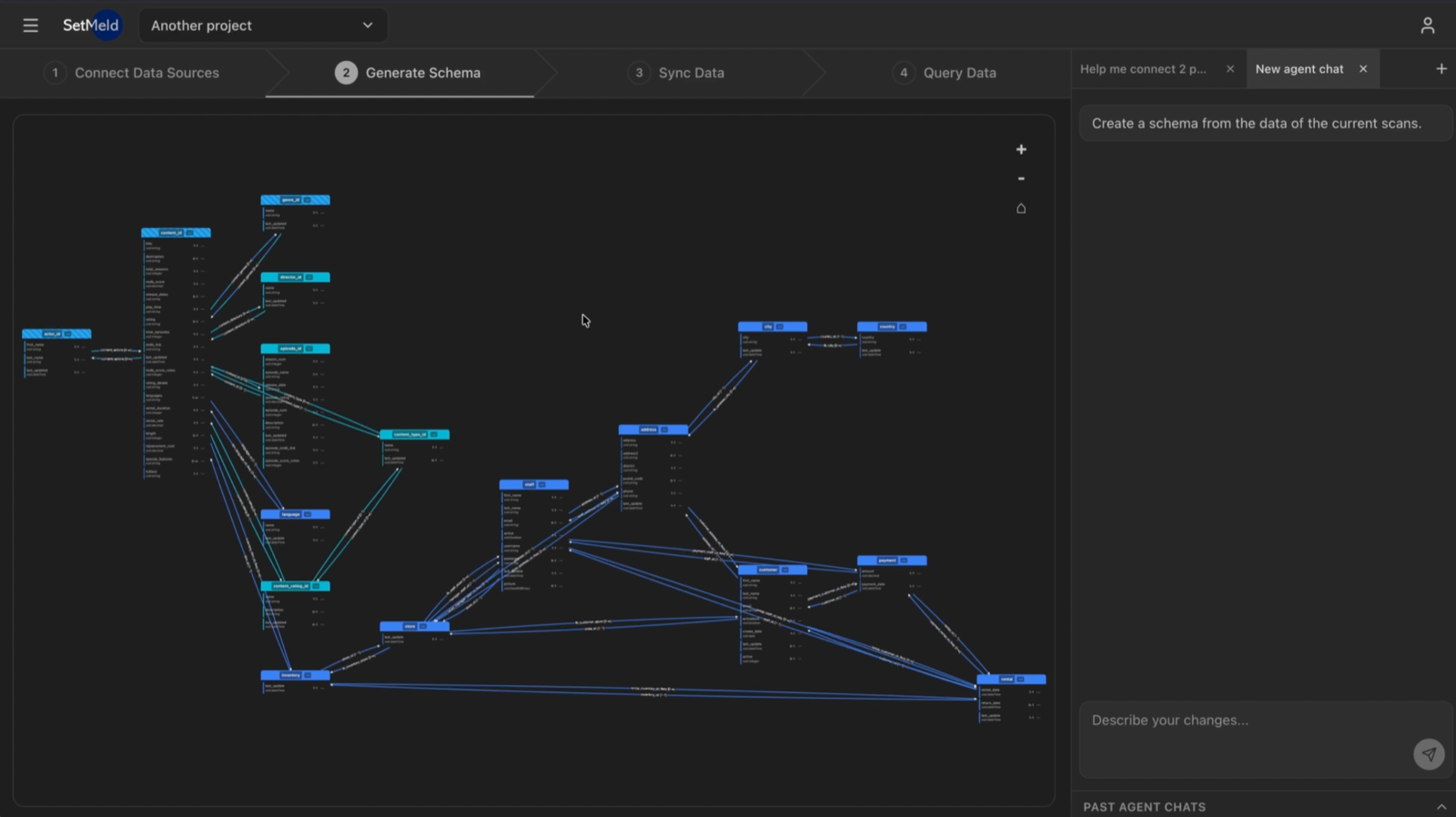
Rather than choosing between the two stacks, connect both. SetMeld generates the mapping into a single governed model and resolves entities across them, giving you combined reporting now and leaving the eventual consolidation decision free of time pressure.
Representative systems. SetMeld connects to any structured dataset you have credentials for. No migration, no modernization prerequisite.
Answered in one query, with provenance
- Which customers, suppliers and contracts do the two organizations already share?
- What does combined revenue look like under one definition rather than two?
- Where do the two product catalogs overlap, and by how much?
- What is our combined headcount, cost base and exposure by region?
- Which duplicate records will cause problems when the systems eventually merge?
Why the answer is trustworthy
Every result is computed over governed, unified records rather than retrieved from a pile of text. Each answer carries datasource attribution back to the systems that produced it, and agents querying the graph inherit the same access controls as the people who own the underlying data.
The integration is generated, verified by our experts and approved by your team.
Deploy on-prem, in private cloud, or as SaaS with the graph resident in your network.
New sources are additional connections at no additional project cost.
What changes after close
Combined reporting in weeks
The synergy case gets measured against real combined data while it still matters.
Consolidation de-risked
The unified model surfaces the duplicate and conflicting records that would otherwise be discovered during migration.
The next acquisition costs less
Additional estates connect to the same model. Serial acquirers stop paying for the same integration twice.
Just closed, or about to?
The unified model is most valuable in the first six months, when everything is still being decided.